
Bipolar Plates for Low- and Medium-temperature Electrolysis
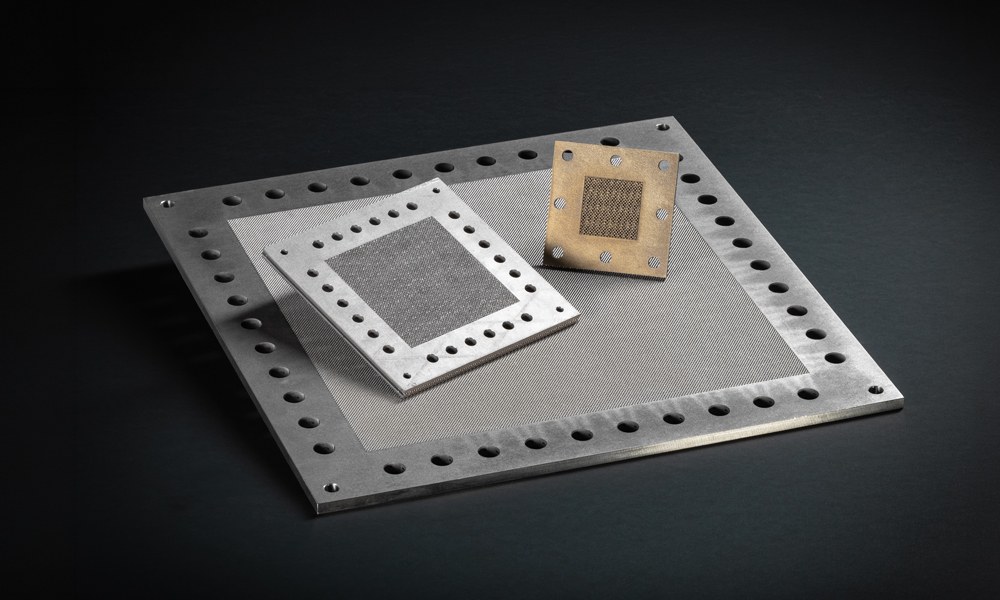
The development of electrolysers for renewable hydrogen production is currently transitioning from R&D towards market launch. Alongside scientific research aimed at improving performance and service life, concepts are being developed that will enable mass production in high volumes and at low cost. A key component of the electrolyser is the bipolar plate. As part of the repeat unit, it plays a particularly important role in larger stacks.
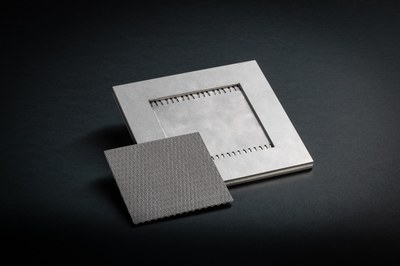
Bipolar plates have several functions. Firstly, they act as structural components to support the membrane-electrode assembly. They also distribute and collect the fluids (water, hydrogen, oxygen) and manage the thermal performance of the stack. Bipolar plates fulfil a safety function by separating the product gases and housing the seals. Furthermore, they conduct the electrical current when the electrolysis cells are connected in series within the stack assembly.
At the Institute of Energy Technologies (IET-4: Electrochemical Process Engineering) at Forschungszentrum Jülich, new concepts and designs for bipolar plates are being developed. The flow distribution structures of conventional bipolar plates consist of channel/web structures, which are time-consuming and costly to manufacture. Our approach is to replace these structures with porous materials that can be produced cost-effectively in large quantities.
Various types of porous materials, such as woven fabrics, knitted fabrics, non-woven fabrics or expanded metal, can be used. By combining these basic types, as well as coarse and fine variants, which are laid in layers on top of one another, a wide range of design options is available. This allows the distribution of the media to be controlled and adjusted with great precision. Fine-distribution structures (known as porous transport layers, PTL) can be integrated.
There are various joining processes for producing a single-piece bipolar plate from these layers. At IET-4, a process based on diffusion bonding was developed in collaboration with the central manufacturing department of Forschungszentrum Jülich (ITE). Bipolar plates of various sizes are on display. Individual cells and stacks were assembled from the different types at IET-4 and tested in electrolysis operation.
Contact

- Institute of Energy Technologies (IET)
- Electrochemical Process Engineering (IET-4)
Room R Y110