
Loading
ScrambledOxs - Atomically engineered core-shell OER catalysts from free‐standing oxide membranes

ERC Consolidator Grant (2026-2031)
Vision | Create novel materials by design to break stability-limitations of electrocatalysts for electrochemical watersplitting
Key objectives | Realize new class of OER catalysts - tailored core-shell heterostructures | Pioneer operando spectroscopy & microscopy to watch reaction dynamics under operation | Transfer & integrate model systems into real electrode environment
Team leader

Dr. Felix Gunkel
Senior Researcher / Group leader Associate Professor, University of Twente (Guest @ IMS)
- Peter Grünberg Institute (PGI)
- Electronic Materials (PGI-7)
Building 04.6 /
Room 51
Room 51
+49 2461/61-5339
E-Mail
Scope
Major efforts in recent years to develop catalysts for the oxygen evolution reaction (OER) have shown that perovskites and spinels have significant catalytic activity, making them a promising materials class for water-splitting for hydrogen production. However, so far these complex oxides have displayed limited stability, which prevents realizing their potential. This activity-stability dilemma is compounded by the fact that most progress on ‘rational catalyst design and property engineering’ so far has focused on modelcatalysts, whereas we lack effective strategies to study optimized electrocatalysts in realistic electrode assemblies.
In ScrambledOxs, we aim to overcome these major challenges through a novel approach based on freestanding, core-shell heterostructure catalysts. In this way, ScrambledOxs will overcome the classical activity-stability dilemma of single phase OER catalysts and bridge the gap between model-catalyst research and applied catalysts research. Besides this materials design approach, 'scrambled' oxide heterostructure will be integrated into catalyst inks, serving as a model-system analogue for real electrode behavior.
My group at PGI-7 used atomically-defined epitaxy of complex oxides, that allows tailoring OER catalysts on the atomic level at well - while focussing on fundmental correlations between catalytic activity, chemical stability, strucutre and electronic properties, our goal is to provide true to the field of energy conversion systems, by providing the design rules for superior catalysts. We are excited to explore fully new material combinations and geomtries, combined with an beyond-state-of-the art approach towards studying OER catalyst during operation (operando methodology). In this physics-guided approach, our team aims to push the active 'catalyst materials design' to a new level.
Project team members

Mary-Jane Wacker
Doctoral Researcher
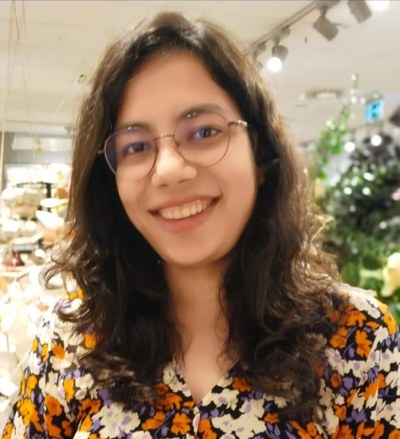
Sudha Zala
Master student
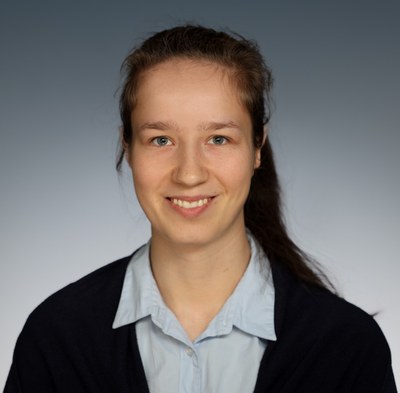
Jasmin Zitzmann
Doctoral researcher
Dr. Felix Gunkel
Senior Researcher / Group leader Associate Professor, University of Twente (Guest @ IMS)
News
Project-related publications
Last Modified: 02.10.2026