de en

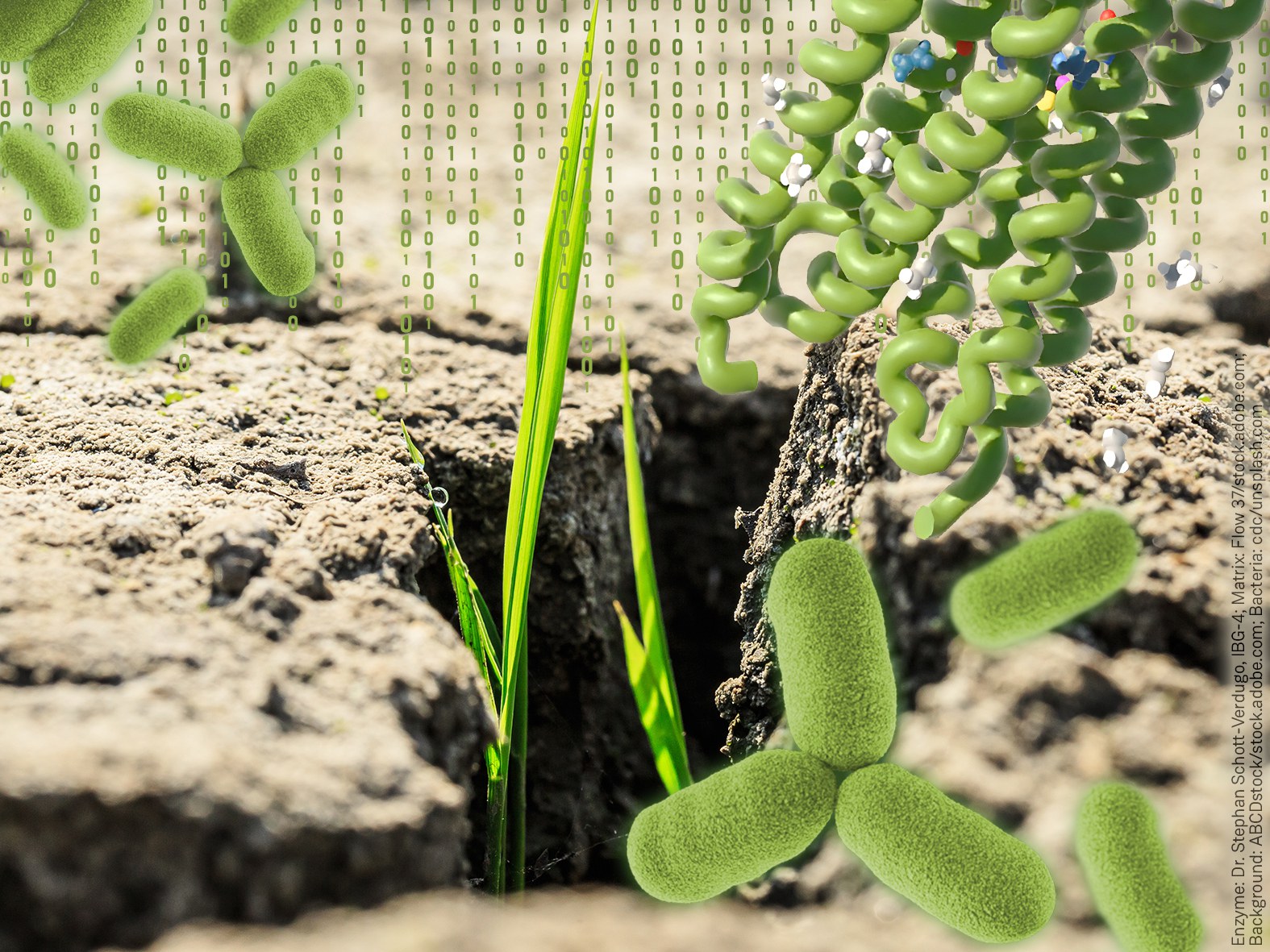
Digital simulation and AI for the bioeconomy
Biological systems are inherently complex, adaptive and dynamic across spatial and temporal scales. Addressing challenges such as climate change, resource scarcity and circular bioeconomy requires predictive modelling, data integration and advanced computational methods.
The Simulation and Data Lab Digital Bioeconomy (SDL-DBE) develops and applies multiscale simulation, artificial intelligence and high-performance computing to understand biological systems from molecules to ecosystems. By integrating experimental data with computational models, SDL-DBE enables data-driven discovery and predictive simulation for sustainable agriculture, biotechnology and environmental research.
Our research
As part of the Centre for Advanced Simulation and Analytics (CASA) at the Jülich Supercomputing Centre (JSC), SDL-DBE brings together scientific expertise from six participating institutes at Forschungszentrum Jülich: IBG-1 to IBG-5 and IAS-8.
Research within SDL-DBE combines
- multiscale modelling
- AI-enhanced simulation
- data science
- high-performance computing
- computational workflows
to address scientific questions across the digital bioeconomy. Our work contributes to the Helmholtz Research Fields Information and Earth and Environment and supports national and European research infrastructures.
Research portfolio
SDL-DBE develops computational methods that address complementary aspects of the digital bioeconomy. Current research includes:
- Linking Molecular scale Interactions of Soil Organic matter with Water retention in Soil-Plant systems (MISOWASP)
- Process-based integrated modeling of rhizosphere N cycling for improved plant N uptake (PINM)
- Bacterial protein secretion: from modeling and data analysis to application (ProSec)
- In vivo quantification of carbon allocation in plant root networks (VICAR)
- Genome-Informed Smart Plants (GISP)
- Leveraging Generative Adversarial Networks (GANs) and Variational Autoencoders (VAEs) to Enhance Microbiome Analysis
Letzte Änderung: 01.07.2026