
47 scientists. 5 challenges. 1 hackathon: MLESM Hackathon 2026
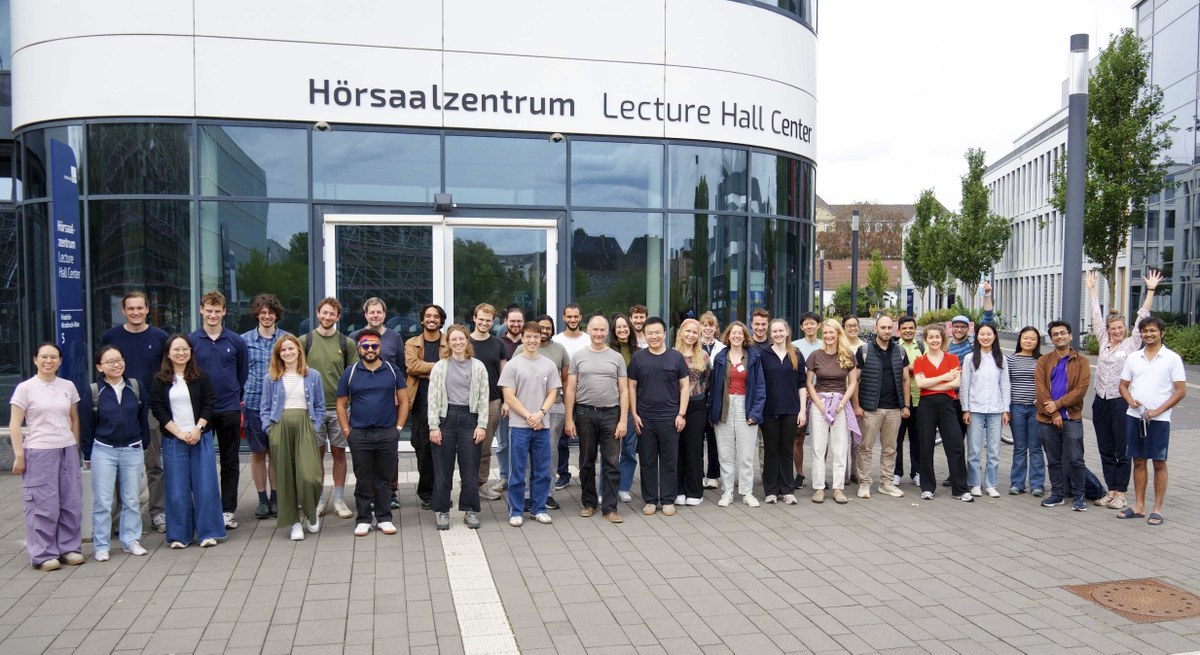
From 19 to 21 August 2026, the Institute of Computer Science at the University of Bonn hosted the second Hackathon on Machine Learning for the Earth System (MLESM), bringing together 47 early-career researchers from around the world to explore how machine learning can help address challenges in Earth system science. Forschungszentrum Jülich’s Earth System Data Exploration (ESDE) group played an active role in organising the event and contributed as organisers, lecturers and tutors to the hackathon.
The hackathon took place just before the MLESM workshop, bringing participants together for three days to code, experiment, and work in teams on concrete questions at the intersection of machine learning, Earth system science, and high-performance computing. The challenges ranged from improving machine-learning-based weather prediction and climate modelling to exploring new approaches for Earth observation data and AI-based Earth system models.
The event was organised through a collaboration between the Center for Earth System Observation and Computational Analysis (CESOC), the University of Bonn, the University of Cologne and Forschungszentrum Jülich, together with the Transdisciplinary Research Area Modelling (TRA) at the University of Bonn. From ESDE, Florentine Weber was part of the organising team. As part of ESDE at the Jülich Supercomputing Centre (JSC), Florentine is Project Manager for the WeatherGenerator and RAINA projects and Science Coordinator for CESOC. Martin Schultz, Head of ESDE, also contributed to the hackathon as an organiser and lecturer.
A challenge from ESDE: Integrating SST into weather and climate models
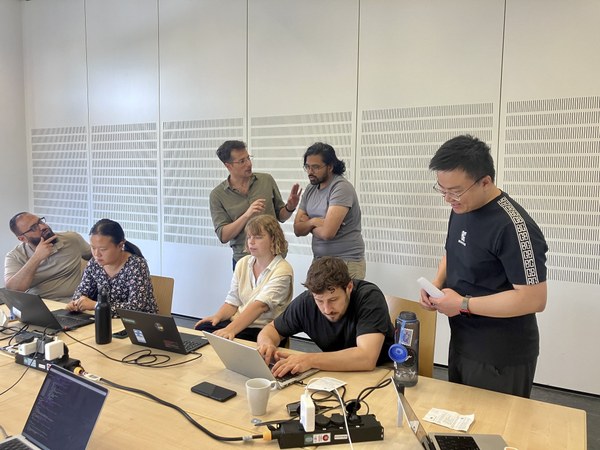
One of the five challenges at the hackathon was organised and tutored by researchers from ESDE at JSC. “Integrating SST into weather and climate models” asked how sea surface temperature (SST) can be incorporated into a modern, data-driven weather model to better capture long-term warming trends.
Working with the WeatherGenerator model, the teams compared two different integration strategies and developed their own evaluation routines to test them. The challenge was supervised by Savvas Melidonis, Jifeng Wang, Jehangir Awan, and Ankit Patnala from Forschungszentrum Jülich, JSC.
For each of the five challenges, a team of participants worked together with tutors from different research institutions, making the hackathon a genuinely cross-institutional effort. The experts guiding the challenges not only shared their knowledge, but also helped form the teams and fostered a strong sense of team spirit. This was clearly visible in the final presentations, where participants shared their approaches, results, and reflections from the three days of intensive work.
Input from the experts
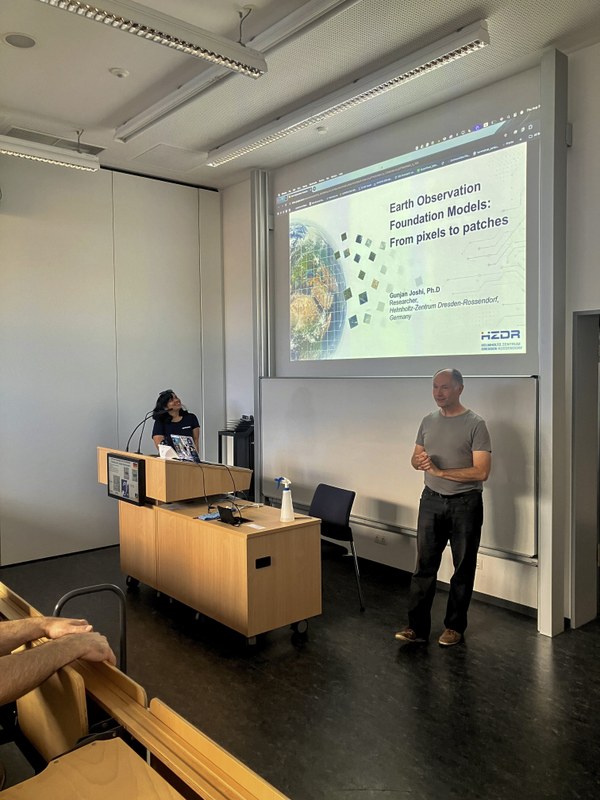
The hackathon was accompanied by a series of lectures, including a contribution from Martin Schultz (JSC-ESDE) on the fundamentals of conventional and machine-learning-based weather modelling. Together with lectures from Gunjan Joshi (Helmholtz-Zentrum Dresden-Rossendorf) on Earth observation foundation models and Matthias Karlbauer (European Centre for Medium-Range Weather Forecasts) on extended-range forecasting with deep learning, these sessions provided participants with additional background for their three days of hands-on coding and data work.
The final output
With participants coming from a wide range of backgrounds and from around the world, the event provided an opportunity not only to develop new technical solutions but also to exchange ideas and build connections across the Earth system and machine learning communities. With 45% of the participants being women, the hackathon also showed a strong level of diversity.
The three days culminated in final team presentations, where participants presented their approaches, results, and experiences. Despite some challenges with High-Performance Computing (HPC) availability during the event, the teams produced impressive results, and two teams were ultimately awarded prizes for team spirit, originality, and completeness. Feedback from participants and tutors was highly positive, with many expressing their interest in taking part again.
The MLESM Hackathon demonstrated the value of bringing together researchers from different disciplines to work intensively on shared challenges. For ESDE, the event also reflects the group's commitment to fostering collaboration and developing the next generation of researchers working at the intersection of machine learning, weather, and climate science.
See you in 2027!
Read the full article on the CESOC website: https://cesoc.net/47-scientists-5-challenges-1-hackathon-can-we-predict-the-output/