Structural and Functional Organisation of the Brain (INM-1)
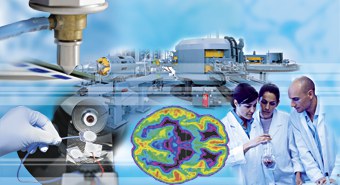
At INM-1, a 3D model of the human brain is being developed that takes into account cytoarchitectonics, connectivity, molecular structure as well as genetics and brain function.
The INM-2 is devoted to the investigation of molecular basics of different functional systems in the healthy and diseased brain as well as their organisation in neuronal networks.
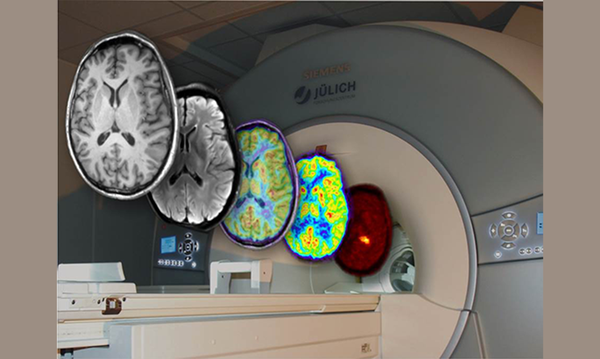
The research and development activities of the Medical Imaging Physics division (INM-4) of the Institute of Neuroscience and Medicine focus on the development, experimental validation and the clinical implementation of novel brain imaging methods.
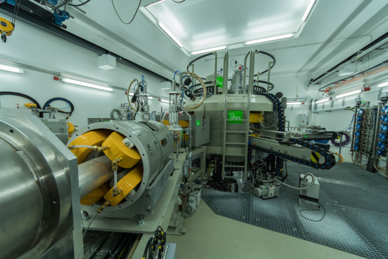
The research activities of the INM-5 focus on the production and development of radioactive probes (tracers) for the elucidation of structure, function and dysfunction of the brain.
The goal of INM-7 (Brain & Behaviour) is to develop a better understanding of the organizational principles of the human brain, to model or predict inter-individual differences using innovative machine learning approaches, and ultimately to develop new approaches for individual diagnosis and prognosis in neurological or psychiatric patients.
The institute division develops and uses molecular simulation, machine learning and bioinformatics tools to investigate neurotransmission in the human brain.
INM-10 develops comprehensive models of brain functions and dysfunctions also with relevance to psychiatric diseases. Here, it is important for us to understand and model the functionally relevant spatial and temporal scales in the brain experimentally. For successful integration of the scales, we explore methods of digitization and quality assurance of scientific workflows.