
ESA's FLEX Mission: Revealing the Hidden Glow of Plants from Space
The European Space Agency's FLEX (FLuorescence EXplorer) mission marks a major milestone in Earth observation. For the first time, a satellite has been specifically designed to measure Sun-Induced Fluorescence (SIF)—an extremely faint light emitted by plants during photosynthesis. Although invisible to the human eye, this subtle glow provides valuable information about how actively plants are photosynthesizing and how they respond to drought, heat, and other environmental stress.
By observing this signal on a global scale, FLEX will offer new insights into vegetation health. The mission's data will help detect plant stress at an early stage, improve climate models, and support more sustainable agricultural practices.
Research from Jülich at the Heart of FLEX

Scientists at the Institute of Bio- and Geosciences – Plant Sciences (IBG-2) at Forschungszentrum Jülich have spent many years developing the scientific methods behind these measurements. Using ground-based sensors, field experiments, drones, and airborne campaigns, they established the techniques that now form the foundation for satellite observations from space.
For many researchers in Jülich, the upcoming launch represents the culmination of years—sometimes even decades—of scientific work. For a long time, it remained uncertain whether the original research concept would eventually become a fully realized ESA satellite mission. Today, that vision is becoming reality.
Bringing the Mission to the Public

The launch is also being accompanied by a dedicated communication campaign. As part of this effort, we interviewed Dr. Juliane Bendig, , who explains the scientific objectives of FLEX and highlights the role of Forschungszentrum Jülich in the mission.
To document this exciting journey, we have also launched a dedicated FLEX-Blog Throughout the mission, participating researchers will share insights into their work, the scientific preparations, and the activities surrounding the satellite launch—perhaps even directly from the mission control centre.

FLEX demonstrates how decades of fundamental research can evolve into an international space mission. By making the invisible glow of plants measurable from space, the mission will deepen our understanding of vegetation health, strengthen climate research, and contribute to a more sustainable future.
Contact

- Institute of Bio- and Geosciences (IBG)
- Plant Sciences (IBG-2)
Room 234

- Institute of Bio- and Geosciences (IBG)
- Plant Sciences (IBG-2)
Room 223

- Institute of Bio- and Geosciences (IBG)
- Plant Sciences (IBG-2)
Room 303
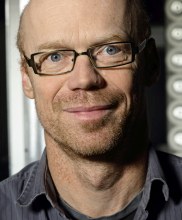
Prof. Dr. Uwe Rascher
Institutsleiter IBG-2
- Institute of Bio- and Geosciences (IBG)
- Plant Sciences (IBG-2)
Room 402