When One Becomes Two: Qubit Splitting for Stable Computing
When One Becomes Two: Qubit Splitting for Stable Computing
30 January 2026
Quantum computers are regarded as a key technology for the future. They open up new possibilities for calculating highly complex processes, such as in chemistry or the optimization of intricate workflows that conventional computers can scarcely handle. However, this requires that their computing units, qubits, are reliably protected against errors and connected to each other in a controlled manner. Scientists from Forschungszentrum Jülich, together with researchers from ETH Zurich and the Paul Scherrer Institute (PSI), have demonstrated how the lattice surgery method can be used to generate two entangled logical qubits from a single logical qubit, with the two qubits interacting with each other. This marks an important step towards functional quantum computers. The results were published in the journal Nature Physics.
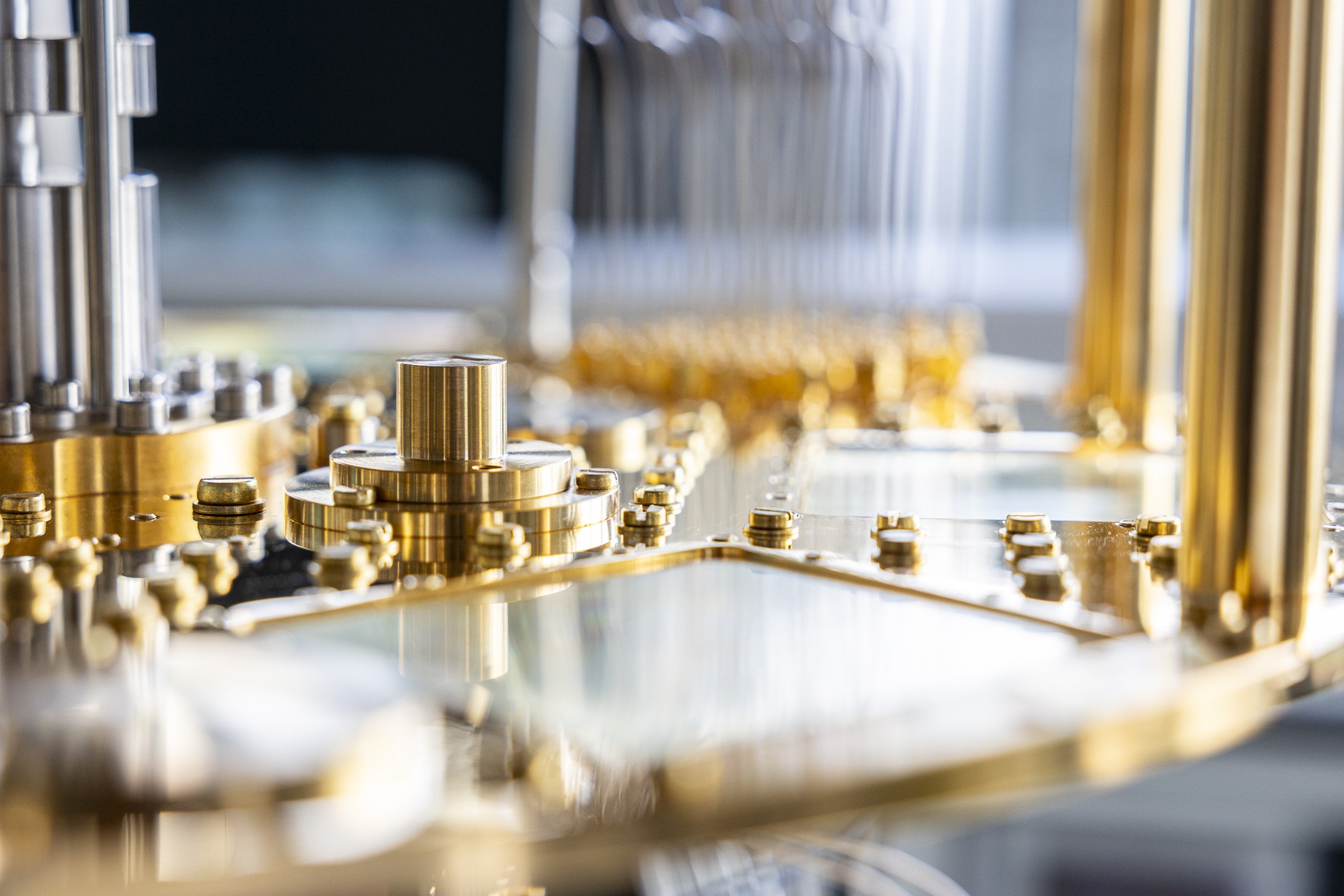
Copyright: Quantum Device Lab, ETH Zürich
The computing units of a quantum computer are very sensitive to external disturbances. Temperature fluctuations, magnetic fields, or cosmic radiation can influence the qubits and destroy their quantum mechanical state. This makes physical implementation particularly challenging. Qubits can be realized in different ways, for example using light particles, trapped ions, or – as in the present study – superconducting circuits. All systems share the need to be shielded from external influences and stabilized through specialized techniques. Unlike conventional computers, errors in quantum computers cannot simply be corrected by repetition or direct measurement.
Fault tolerance through logical qubits
The solution lies in what is known as quantum error correction. This involves combining many physical qubits into a stable logical qubit. The physical qubits are the actual physical units, while the logical qubit is an abstract computing unit protected by error correction. This structure makes it possible to detect and correct errors in individual qubits without directly measuring and thus destroying the sensitive quantum state. However, a single stable qubit is not sufficient for true quantum algorithms. Instead, it is crucial to entangle several logical qubits and perform precise computing operations between them.
Lattice surgery – performing quantum computing operations
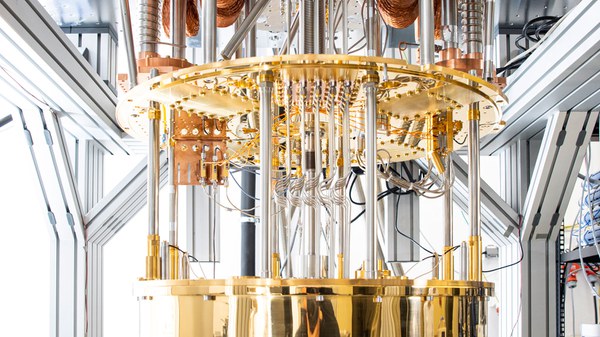
Copyright: Quantum Device Lab, ETH Zürich
Lattice surgery refers to the process in which individual logical qubits in the lattice are joined or split, with “surgical” operations performed in the figurative sense. In the current study, the lattice of physical qubits mapping the logical qubit is modified so that its area is divided into two regions. Each of these regions represents a new logical qubit. The quantum information is divided between the two regions, creating an entangled state. At the same time, any errors that occur during the process can be detected by the existing error-correction system and, in some cases, directly compensated for without measuring the qubits.
Jülich scientists Lukas Bödeker and Dr. Luis Colmenarez, who conduct research in the Theoretical Quantum Technology Group led by Prof. Markus Müller, which is based at both the Peter Grünberg Institute of Forschungszentrum Jülich and RWTH Aachen University, supported Professor Andreas Wallraff’s team at ETH Zurich with the experimental work. They carried out preliminary simulations and helped plan the logical protocols. “For this groundbreaking experimental work, we theoretically analysed how the state of a logical qubit can be reliably transferred from one location to another in a fault-resistant manner,” the two scientists explain.
The current study makes an important contribution to the realization of scalable quantum computers. Lattice surgery is considered a promising building block for the modular construction of large quantum processors. In such processors, logical qubits can communicate reliably with each other without compromising the stability of the overall system.
A key focus of current research is the efficient, fault-tolerant generation of “magic states”. These specially prepared qubit states enable complex computing operations that cannot be achieved using conventional methods. Only by incorporating these states into advanced quantum algorithms can a computational advantage over conventional computers be achieved.