Science: GMR Effect 2.0 for Future Orbitronics Devices
Science: GMR Effect 2.0 for Future Orbitronics Devices
3 July 2026
An international research team has shown in Science how magnetic states can be read out electrically using the orbital angular momentum of electrons. Jülich researchers contributed to this milestone in orbitronics, opening a new route for future electronic devices.
For the first time, an orbital current generated in copper (Cu*) can be efficiently coupled to orbital moments in cobalt oxide (CoO).Copyright: Mathias Kläui, JGU
Electric currents are fast; magnetizations are persistent. Modern information technology depends on combining the two. A key breakthrough was giant magnetoresistance — the GMR effect for short — for whose discovery Albert Fert and Jülich researcher Peter Grünberg were awarded the Nobel Prize in Physics in 2007. It enabled significantly higher storage densities in hard drives and became the starting point for spintronics.
The orbital magnetoresistance now demonstrated is related to the GMR effect but goes one step further. As with the GMR effect, the electrical resistance of a material changes depending on its magnetic state. However, the readout is not based on the electrons’ spin, but rather on their orbital angular momentum.
A direct path to orbitronics
“The key point is that so-called orbital currents were utilized directly, as these can be generated much more efficiently than conventional spin currents,” says Dr. Mahmoud Zeer from Prof. Yuriy Mokrousov's research group at the Peter Grünberg Institute (PGI-1) of Forschungszentrum Jülich. “As a result, this effect opens up a new approach for next-generation orbitronic devices, for example in the field of quantum technologies, that could operate faster and more energy-efficiently than today’s spin-based concepts.”
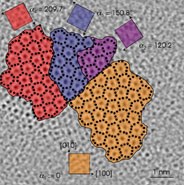
More than 20 researchers from several international research institutions were involved in the work. The experiments with samples prepared at the University of Tokyo were performed at Johannes Gutenberg University Mainz. There, the devices, and the key transport measurements were produced and carried out. Researchers at Forschungszentrum Jülich developed the theoretical description of the effect. Using the high-performance electron microscopes at the Ernst Ruska Centre, the high quality of the interface was finally visualized experimentally; a key to the observed effect.
Strong currents, great potential
In simple terms, orbital angular momentum describes the motion of an electron around the atomic nucleus. It differs from spin, another property of the electron, which is often vividly described as its intrinsic rotation or internal compass.
Currents that carry the orbital angular momentum of electrons are referred to as orbital currents. They are considered promising because they can be significantly stronger than spin currents and can also be generated in commonly available, comparatively environmentally friendly materials. Until now, however, this potential has been difficult to exploit in practice.
The reason: In conventional magnets, the contribution of orbital angular momentum to magnetism is largely suppressed by the crystal lattice—experts refer to this as “quenching.” Consequently, orbital currents previously had to be converted into spin currents first. This intermediate step reduces efficiency and limits the potential benefits.
The interface makes the difference
With the orbital magnetoresistance now demonstrated, this detour could be eliminated in the future. The key to this is the material mix. The researchers combined layers of cobalt oxide and oxidized copper only a few nanometers thick. Cobalt oxide is an antiferromagnetic insulator. It does not conduct electricity and appears virtually non-magnetic from the outside. Internally, however, the magnetic moments are strictly ordered — and the orbital angular momentum of the electrons is exceptionally well preserved.
Purely orbitronic approach
Oxidized copper, on the other hand, is particularly well suited to generating orbital currents. At the interface, two complementary materials thus meet: a source of orbital currents and an orbital magnet that, for the first time, interacts directly with them.
“We have thus realized the first purely orbitronic device approach,” says first author of the publication Dr. Christin Schmitt at Johannes Gutenberg University Mainz. “For the first time, we have been able to directly couple mobile orbital moments with localized orbital moments in a magnet. In doing so, we have achieved a milestone in orbitronics and laid the foundation for significantly more energy-efficient data storage.”
The measured orbital magnetoresistance was even up to 70 times greater than the corresponding spin-based effect in various reference samples.
Original publication
Christin Schmitt, Sachin Krishnia, Mahmoud Zeer et al. Orbital magnetoresistance in the antiferromagnet CoO driven by dynamic orbital angular momentum Science (2026), DOI: 10.1126/science.adw1808