
Loading
Official Launch of JION Quantum Computer at Jülich
3. September 2026
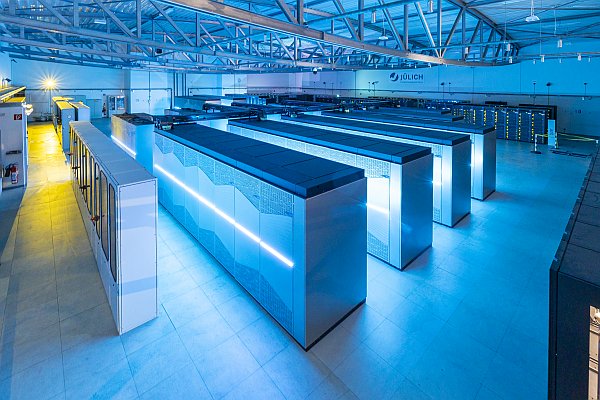
Forschungszentrum Jülich and Siegen-based start-up eleQtron have officially inaugurated the quantum computer JION. Developed in North Rhine-Westphalia (NRW), JION will be made available to research institutions and industry through the JUNIQ user infrastructure, enabling hybrid computations with Jülich’s supercomputers. NRW Minister-President Hendrik Wüst and NRW Science Minister Ina Brandes hailed JION as a technological milestone.
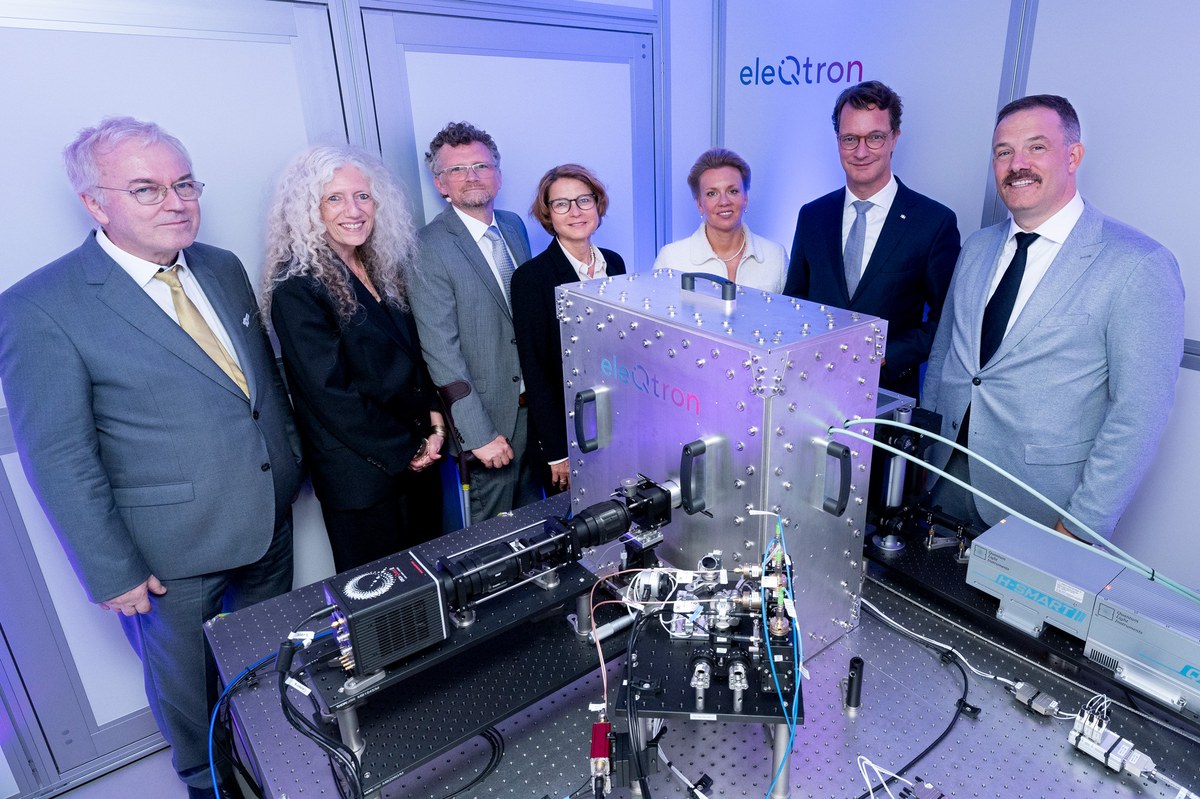
Inauguration ceremony with guests from NRW state government
The inauguration ceremony at the Jülich Supercomputing Centre (JSC) of Forschungszentrum Jülich focused on a shared political, scientific, and technological breakthrough. Minister-President Wüst and Minister Brandes emphasized the importance of JION for North Rhine-Westphalia as a research and industrial hub. The ceremony served to underline the close collaboration between politics, research, and industry. As a symbolic part of the ceremony, a computing operation was performed publicly on JION for the first time.
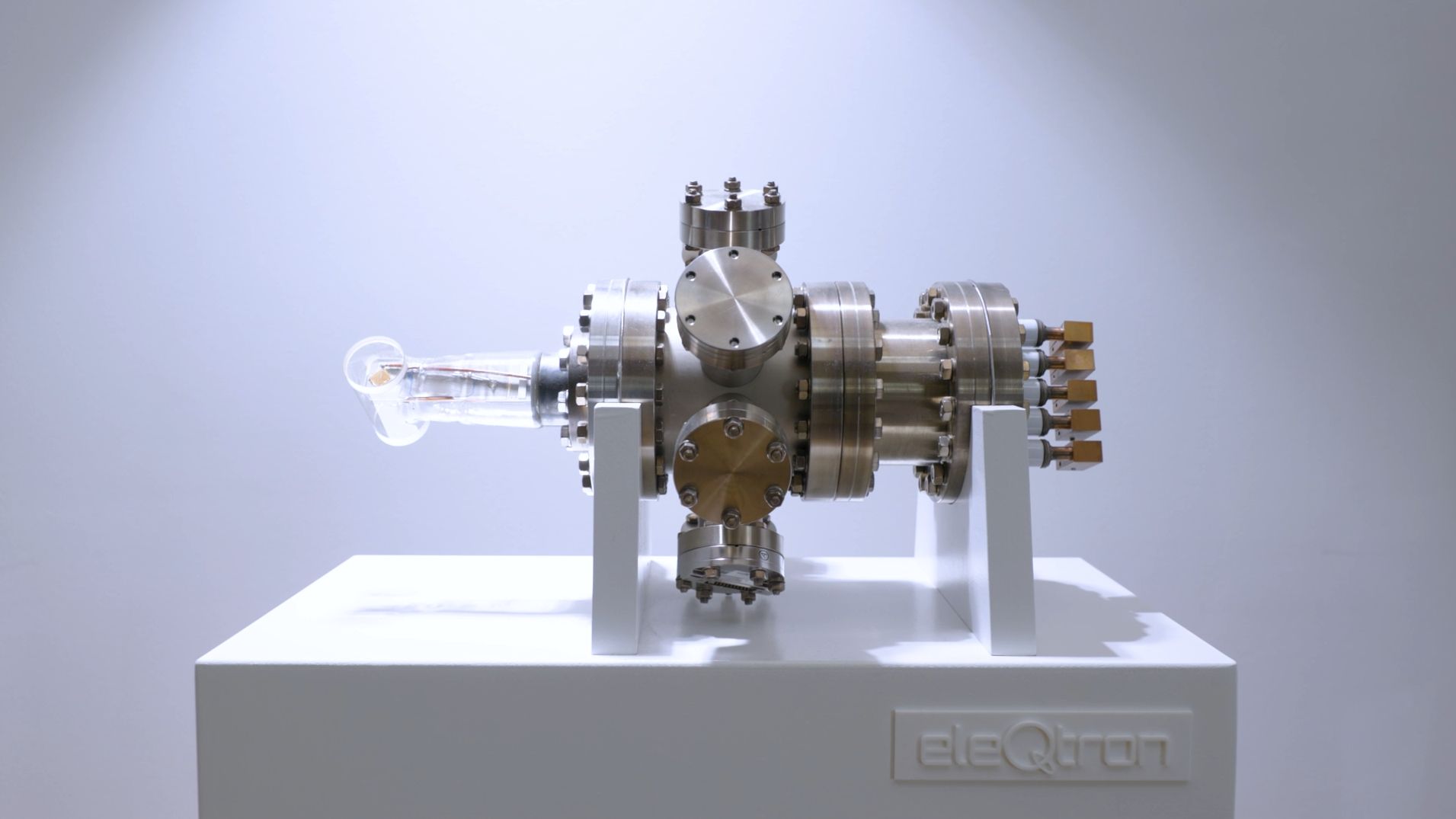
JION – short for “Jülich trapped-ION quantum computer” – is a digital, gate-based trapped-ion quantum computer. Its qubits consist of ionized ytterbium atoms, which are held in a vacuum by electromagnetic fields and precisely controlled for computations. Unlike superconducting systems, the quantum processor does not need to be operated at temperatures close to absolute zero. To control the qubits, JION utilizes the magnetic gradient induced coupling (MAGIC) technology developed in Siegen. Microwaves and deliberately generated variations in the magnetic field allow the qubits to be controlled individually and connected directly to one another. This simplifies control and could facilitate the development of larger, more powerful quantum systems in the future.
From project launch to an integrated system
JION is being realized as part of the EPIQ project – a development partnership for trapped-ion quantum computers in NRW. When the project was launched in Siegen in March 2024, JSC and eleQtron announced that they would jointly develop a modular supercomputer consisting of a quantum module and several classical digital modules. The Ministry of Culture and Science of the State of North Rhine-Westphalia is providing around € 21 million in funding to the partnership over a four-and-a-half-year period. EPIQ was born out of the quantum computing network “EIN Quantum NRW”.
With today’s inauguration, this project has developed into a fully operational system at Forschungszentrum Jülich. JION is set to open up new prospects for applications in science and industry, for example in optimization tasks in logistics, transport, and process engineering, as well as in physics, chemistry, biology, medicine, materials research, and machine learning.

JUNIQ: access and hybrid use
JION will be integrated into the Jülich UNified Infrastructure for Quantum computing (JUNIQ), making it part of Forschungszentrum Jülich’s modular supercomputer architecture. JUNIQ provides access to various quantum systems and connects them to JSC’s high-performance computing (HPC) infrastructure. With JUNIQ, certain computing operations can be offloaded to quantum systems when using classical JSC supercomputers.
In future, researchers and companies will be able to use JION to test hybrid HPC–quantum computing workflows and prepare applications. JUNIQ thus makes the system more than just a demonstrator and strengthens Jülich’s position as a centre for integration, benchmarking, and user applications. Within the EPIQ project, service, support, and training will also be offered for JION, supporting users from science and industry.
Next step: scaling and industrial application
As part of the inauguration ceremony, Minister-President Hendrik Wüst, presented the funding approval for SQALING (scalable quantum computing from NRW). eleQtron’s independent development project is being funded by the state of North Rhine-Westphalia with up to around € 25 million from EU funds through the ERDF/JTF programme in NRW. The aim is to further develop the trapped-ion technology developed in Siegen into scalable, chip-based quantum computing platforms that could potentially also be used in industry. While JION demonstrates what has already been built, SQALING represents the next development stage. Together, the two projects are intended to help strengthen technological expertise and economic value creation in Germany.
The funding approval for the new Q-STAR.NRW project was also presented. The aim of Q-STAR.NRW is to procure and integrate a scalable semiconductor quantum computer into JUNIQ, with the aim of strengthening research, industrial collaboration, and structural change in the Rhenish mining area. Funded with up to around € 25 million from structural funding for the Rhenish mining area under the Investment Act for Coal Regions (InvKG) and by the state of North Rhine-Westphalia, the project aims to integrate a system with up to 200 qubits. Like EPIQ and SQALING, Q-STAR.NRW will strengthen North Rhine-Westphalia’s technological sovereignty, increase the international visibility of the Rhenish mining area as a high-tech location, and establish a high-performance innovation ecosystem for quantum computing. This in turn will enable long-term value creation, new industries, and sustainable employment in the region.
Statements on the inauguration
„Quantum technologies offer huge opportunities. North Rhine-Westphalia has long been leading the way. Our goal is clear: we want Germany to become the world’s leading location for quantum technology, with North Rhine-Westphalia acting as a powerful driving force. We are the pioneering region for quantum technology; it was here that the first breakthroughs in quantum hardware in Germany were achieved. The new JION quantum computer demonstrates what can be achieved when we connect our strong quantum computing start-up ecosystem with our cutting-edge research. The race for technological leadership in quantum computing is still wide open on the international stage. Our state has every opportunity to be right at the forefront. To achieve this, we are bringing science and industry together in the field of quantum technologies in a targeted and systematic manner. We want to make North Rhine-Westphalia’s quantum ecosystem indispensable.“
Hendrik Wüst, Minister-President of the Federal State of North Rhine-Westphalia

„Fast, resource-efficient computers will be the key to innovations that make people’s lives better and safer in the future – in medicine, materials research, and cyber security. By integrating JION into Forschungszentrum Jülich’s computing network, we are creating unique opportunities across Germany for science and industry to accelerate innovation. My sincere thanks go to everyone involved who have made this milestone possible: Forschungszentrum Jülich, eleQtron – the start-up founded by the University of Siegen – and the “EIN Quantum NRW” platform, which has contributed significantly to the success of this project by bringing all stakeholders together.“
Ina Brandes, Minister of Culture and Science of the Federal State of North Rhine-Westphalia

"A sovereign Europe needs technological strength – and that is what we are creating here in the Rhenish mining area. Quantum technologies are among the most exciting and promising technologies of our time, as they offer enormous opportunities for fast and secure digital processes and intelligent solutions to the major challenges of our times. Here, cutting-edge technology is being developed that benefits many companies in the chemical, pharmaceutical, and logistics sectors – and, through their products, everyone."
Mona Neubaur, Minister of Economic Affairs, Industry, Climate Action and Energy of the State of North Rhine-Westphalia

“With JION, we are bringing together a quantum computer developed in North Rhine-Westphalia with our high-performance supercomputing infrastructure here at Jülich. In doing so, we are creating the conditions for combining quantum computing and high-performance computing, allowing us to use quantum computing to address specific problems in research and industry.”
Prof. Astrid Lambrecht, Chair of the Board of Directors at Forschungszentrum Jülich

“JUNIQ provides access to a range of quantum computers and allows their performance to be compared. With JION, we are expanding this unique user platform to include a trapped-ion system from North Rhine-Westphalia and connecting it to our HPC infrastructure – for research and industrial applications.”
Prof. Kristel Michielsen, head of the Jülich Supercomputing Centre

“With JION, we are integrating our trapped-ion and MAGIC technology into one of Europe’s leading user infrastructures for quantum computing. Together with the Jülich Supercomputing Centre, we are creating the conditions to further develop the system, integrate it into hybrid computing architectures, and ultimately make it accessible to industry and science.”
Jan Henrik Leisse, co-founder and CEO of eleQtron
Further Information




Last Modified: 03.09.2026