

Go to Online-effzett for the latest topics and background information
Untangling the mind
Changes in the structure of the DISC1 protein in the brain can trigger mental illnesses such as schizophrenia. Researchers at Jülich have analysed the remodelling process and developed an approach to prevent it.
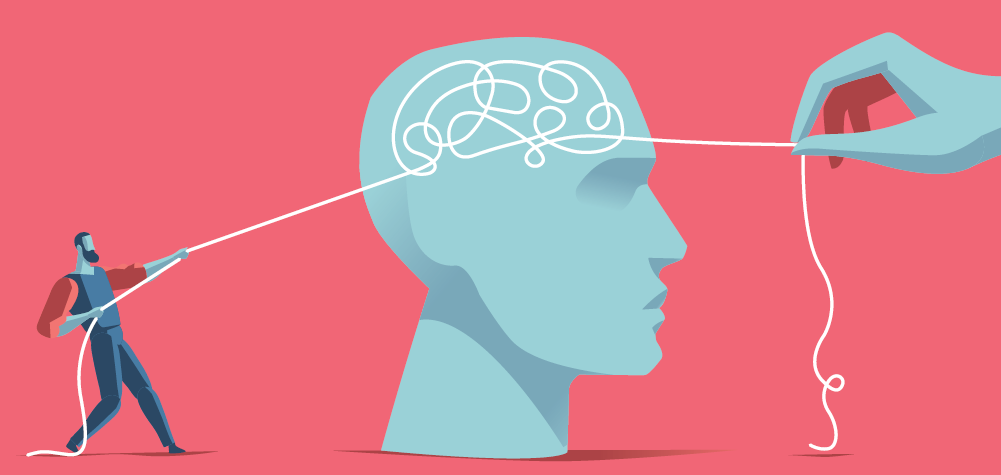
Normally, the protein called DISC1 – short for Disrupted in Schizophrenia 1 – acts as a molecular scaffold in the brain. It ensures that other proteins perform their tasks correctly in cell growth and neuronal development. “DISC1 is a key factor in brain development, particularly in the early stages of life. But when it undergoes pathological changes, it clumps together and can no longer fulfil its function in the brain,” says Dr. Abhishek Cukkemane from the Institute of Biological Information Processing (IBI-7).
This leads to an imbalance in the complex interaction of proteins in the brain. Moreover, these changes can increase the chances of mental health problems such as schizophrenia, bipolar disorder, or major depressive disorder.
Cukkemane and his research group “Towards Understanding the Molecular Pathomechanisms of Schizophrenia” have investigated the restructuring process of the protein using various methods from biophysics, biochemistry, and structural biology. For the first time, they have been able to present different forms of the protein in detail. They found that certain mutations in a partially flexible region of DISC1 – known as the C-region – can cause the protein to clump together. “This flexible region is generally advantageous because it allows the protein to perform a variety of functions. However, it also makes it susceptible to structural malformations,” explains the Jülich researcher.
Malformations result in the formation of fibre-like clumps, known as aggregates, which resemble tangled cords and disrupt normal cell function. This can interfere with how the nerve cells develop and communicate and can have serious consequences, particularly for the developing nervous system of children.

For the first time, there might be a therapeutic approach that directly targets the molecular cause of mental illness rather than merely treating its symptoms.
Tailor-made molecules
Once the scientists had deciphered the biological basis, they began to look for a way to prevent the pathological remodelling process. To achieve this, the team developed peptide mimetics –small, tailor-made molecules that replicate the essential characteristics of naturally binding peptides (see info box). This enables the molecules to interact with biological target structures such as DISC1.
In laboratory experiments, these active substances successfully prevented the pathological clumping of the protein, thus preserving its normal function. “This means we have not only found a potential drug candidate, but, for the first time, we may have a therapeutic approach that directly targets the molecular cause of certain mental illnesses instead of merely treating their symptoms,” highlights Cukkemane.
23
million
-
people are affected by schizophrenia, according to estimates by the World Health Organization (WHO). Those living with the condition often experience phases in which they perceive the world differently than usual. For instance, they may hear voices or feel like someone is trying to control or harm them.
The Jülich scientists have already filed a patent application for the active substances. The next steps are to test them – first in cell cultures and then in animal models. The long-term goal is to enable clinical trials and develop new cause-oriented therapies for mental illnesses.
Although several hurdles remain before clinical application, Cukkemane believes that basic research is valuable: “The results provide a clear medical and biological explanation for processes that have long been difficult to grasp – making an important contribution to destigmatizing mental illnesses,” says the structural biologist.
Imitators: Sometimes it is helpful to copy others. This is true not only for animals and plants, but also in the world of chemistry. Active substances that mimic the structure or function of a substance produced naturally in the body are called mimetics in pharmacology. Peptide mimetics are tailor-made chemical compounds that resemble natural peptides, which regulate metabolism in the body, for example. Compared to natural peptides, mimetics have the advantage of being better absorbed or more effective. Well-known peptide mimetics include ACE inhibitors, which lower blood pressure. The natural peptide, which comes from snake venom, breaks down too quickly in the body to be sufficiently effective.
This text is taken from the 2/25 issue of effzett. Text: Anna Tipping
Never miss an issue of effzett again


Last Modified: 01.08.2026