10 Years of the Paris Climate Agreement - Interview with Systems Researcher Prof. Dr. Jochen Linßen
Ten years ago, the international community came together in Paris and agreed to limit global warming. Since then, it has become clear that climate protection needs more than just target figures – it needs reliable guidance. This is precisely what Prof. Dr. Jochen Linßen is working on at Forschungszentrum Jülich (FZJ). As head of Jülich Systems Analysis at the Institute of Climate and Energy Systems (ICE-2), he is investigating how Germany and Europe can transform their energy systems without losing sight of energy security, economic efficiency, or the environment.
10 December 2025
To achieve this, his team uses complex models that, in simplified terms, function like “what-if” machines: they calculate how various political, technical, and societal decisions could affect the future of energy. The resulting scenarios do not predict the future – but they do show which paths are realistic and viable.
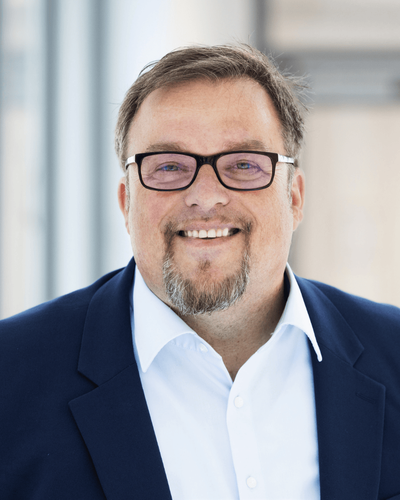
"If the rapid and targeted expansion of wind and solar power is successful, transport and buildings will also benefit," says Jochen Linßen in an interview.Copyright: Forschungszentrum Jülich / Sascha Kreklau
To mark the tenth anniversary of the Paris Climate Agreement, we spoke to Jochen Linßen. Where do we stand today, what options are on the table, and what will it take for Germany and Europe to actually achieve the energy transition?
In parallel with the interview, we have created a new webpage dedicated to the topic of climate research which presents selected interdisciplinary research projects, accompanied by a list of experts and podcasts. The webpage shows how broadly positioned Jülich’s climate research is – and what contribution we as Forschungszentrum Jülich are making to achieving climate targets.
It’s been ten years of the Paris Climate Agreement. Looking back on this decade, where do we stand today in terms of climate targets?
Although the trend of rising CO₂ emissions has slowed worldwide, there is no cause for complacency. In 2024, man-made emissions reached a new all-time high of almost 38 billion tonnes – in 1990, the figure was just over 22 billion, representing an increase of around 70 % despite the climate agreements. A reversal of the trend, which would lead to falling greenhouse gas emissions, is not yet foreseeable.
On an even more serious note, several major economies have so far failed to meet the climate targets they set themselves in the Paris Climate Agreement. This agreement obliges the international community to limit global warming to well below 2 °C – preferably 1.5 °C – above pre-industrial levels.
The consequences of this failed climate policy have long been apparent. With every tenth of a degree of additional warming, the risks to ecosystems, societies, and economies increase. And from an economic perspective, one thing is clear: the costs of increasing climate damage will exceed the investment needed for consistent climate protection in the long term. Future generations will bear the brunt of the damage caused by man-made climate change.
Where does Germany stand in this development?
As the most populous and economically strongest country in Europe, Germany has a special responsibility in terms of European climate protection targets. This role is not only a political aspiration, but also an obligation.
The Climate Action Act of 2022 – called for by the Federal Constitutional Court – forms the central framework. It sets binding climate protection and sector-specific targets, and lays out the path to net greenhouse gas neutrality by 2045. Germany, but also Europe as a whole, has made significant progress thus far. However, the current course alone will not be enough.
The next stages require significantly more ambitious measures, supported by technological innovation, new business models, and consistent political implementation.
What do your scenario studies show? Are the climate targets realistic – and under what conditions?
Our research and model analyses at Forschungszentrum Jülich clearly show that the transformation of the energy system is technically feasible and even economically beneficial. It is crucial that we set the right course early on. There is not just one way to do this: our models and scenarios show a whole range of realistic options and highlight which steps are crucial today and in the coming years to achieve the targets.
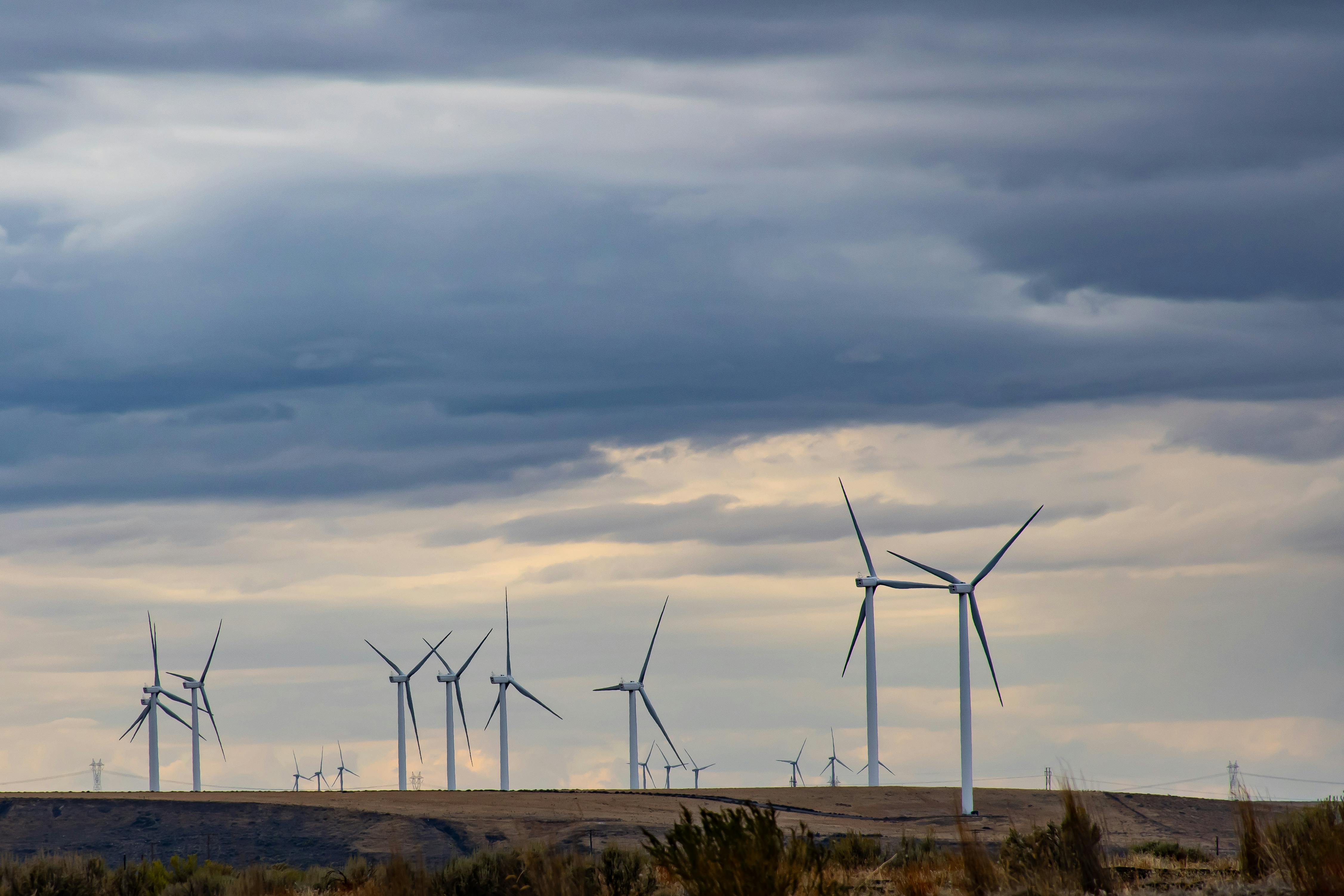
Here is just one example: if the rapid and targeted expansion of wind and solar power is successful, transport and buildings will also benefit – because renewable electricity can be used directly and intelligently for electric vehicles and heat pumps through a process known as sector coupling. This significantly reduces the demand for oil and natural gas and lessens dependency on individual countries. Such interrelationships illustrate how strongly today’s decisions influence tomorrow’s energy system and energy security.
This presents a great opportunity. Those who consistently utilize research and development options now can bring new innovations from the prototype stage to widespread application more quickly. This strengthens competitiveness and climate protection simultaneously and enables the transformation to be actively shaped – instead of having to react later under greater pressure.
The natural gas crisis of 2022, triggered by Russia’s war of aggression against Ukraine and all too quickly forgotten, clearly showed how vulnerable the economy and society are to sudden shortages of fossil fuels. Our models have also clearly demonstrated that a net-zero energy system is significantly less vulnerable and increases the geostrategic security of the energy supply. Greater resilience is not a by-product, but an integral part of the transformation.
A departure from ambitious climate protection efforts would therefore be counterproductive both economically and socially. Climate protection has long been part of modern value creation. At the same time, potential competitive disadvantages for industry in global trade must be cushioned by political and economic measures such as support programmes for climate-friendly production processes or reliable global CO₂ prices. It is crucial to consider competitiveness, climate and environmental protection, and resilience all together.
What specific questions from politicians, ministries, or authorities find their way to your desk – and how do your models help to find answers to them?
We are regularly asked key questions about the future of the energy system, such as:How secure is the supply during periods of low wind and low sunlight? Can Germany, together with Europe, become less dependent on fossil fuel imports? Which infrastructure and technologies need to be available and when in order to achieve this goal? How are renewable energies stored and transported, and where are they used?
These questions are legitimate – and they can only be answered using rigorous scientific methods and models. With our ETHOS model suite, we investigate these questions by mathematically mapping Germany’s energy system – from electricity grids and heating networks to industrial processes and global energy flows. For example, we use ETHOS to calculate which combination of technologies makes supply both reliable and cost-effective, how much renewable energy is needed for this, and where bottlenecks may arise. Our ETHOS model suite makes precisely such analyses possible. It allows for unbiased, scientifically sound investigations into technologies, transformation paths, value chains, and market ramp-ups in future energy systems.
We consider not only technical developments such as batteries, grid expansion, or potential long-term options like nuclear fusion, but also political, economic, and social conditions, including approval rules for wind turbines or the acceptance of new energy technologies in society. Our scenarios make these interrelationships transparent and provide politicians, government, industry, and science with a sound basis for decision-making.
Energy scenarios bring together technical, social, and ecological dimensions and provide an overall picture of a highly complex system. They highlight possible solutions and options – but should not be confused with forecasts. Forecasts attempt to predict the future, similar to a weather report. But just as there is no reliable weather report for the next 25 years, it is impossible to make an exact prediction of the future national or global energy system.
What scenarios can do, however, is show which paths are possible, which decisions would be necessary, and what consequences different paths would have. This is precisely what makes them an indispensable tool for an evidence-based, responsible energy and climate policy.
When we meet again on the 20th anniversary of the Paris Climate Agreement, what do you hope to be able to say about the energy transition in Germany?
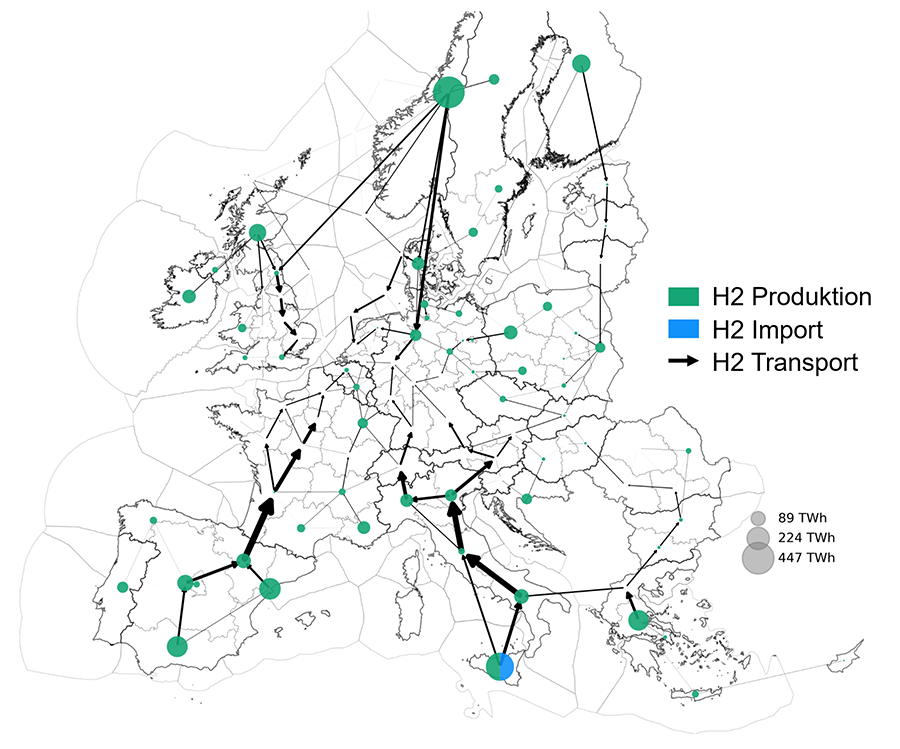
I hope I can say that Germany has made the transition from ambitious plans to decisive action – and thus demonstrated that climate protection and economic strength are not mutually exclusive. That key technologies have made their breakthrough, from renewable energy systems to high-performance storage facilities and a functioning hydrogen infrastructure.
And I hope that our analyses will have helped to reliably shape this path by providing guidance, highlighting risks, and identifying options. If we achieve this, the energy transition will not only succeed – it will be a locational advantage for Germany and Europe.