Breakthrough for Cassava Productivity and Drought Resilience
Breakthrough for Cassava Productivity and Drought Resilience
18 December 2025
An international team of researchers from the Cassava Source-Sink Consortium (CASS) has achieved a significant breakthrough in improving cassava. Cassava is a central staple food in many regions of the world. The scientists showed that targeted modification of potassium transport can increase cassava productivity without the need of additional fertiliser. The modified plants were also more tolerant of drought stress. The results of the study have been published in the renowned journal Nature Plants.
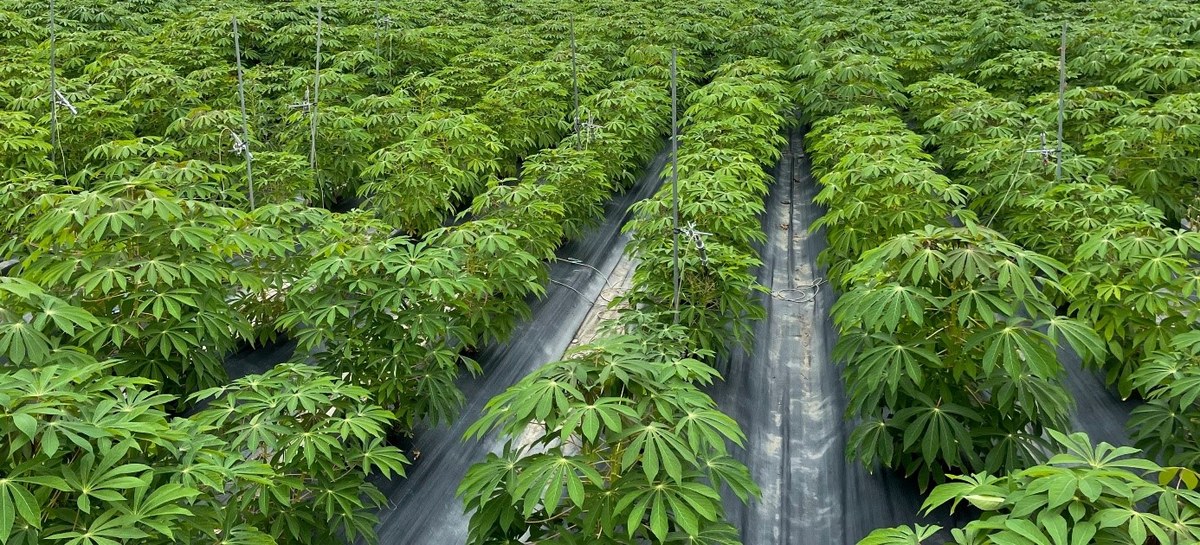
Cassava grown in the field with sensors photosynthetic efficiency measurements.Copyright: — Dr. Onno Muller
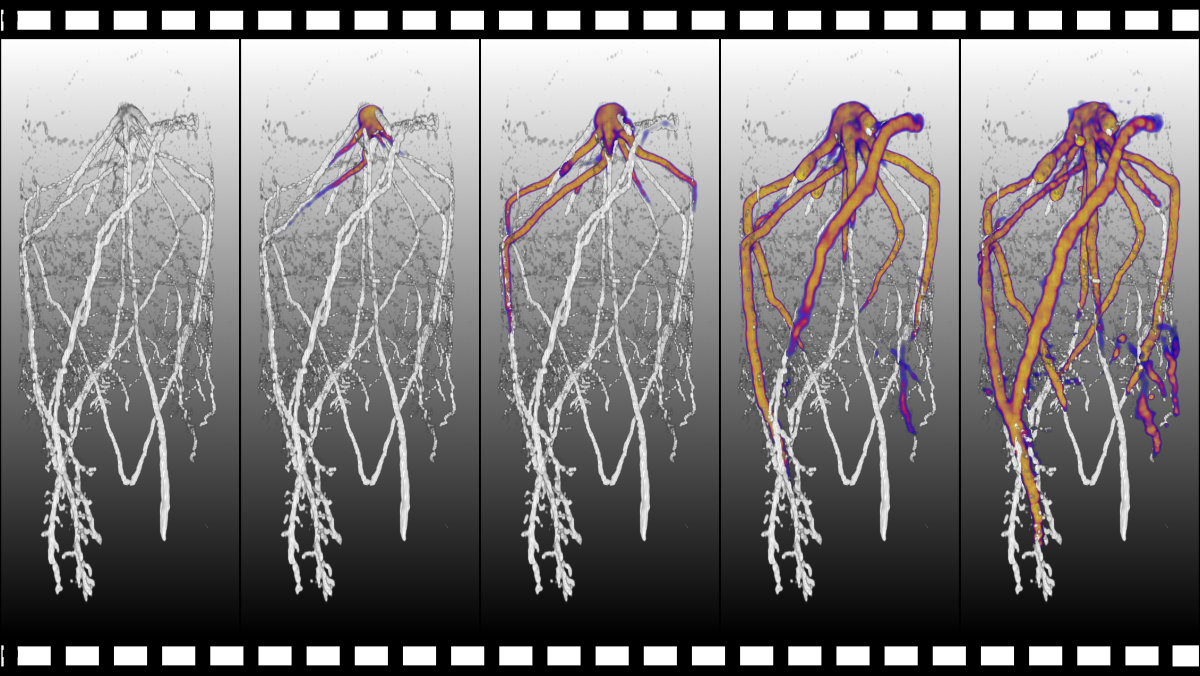
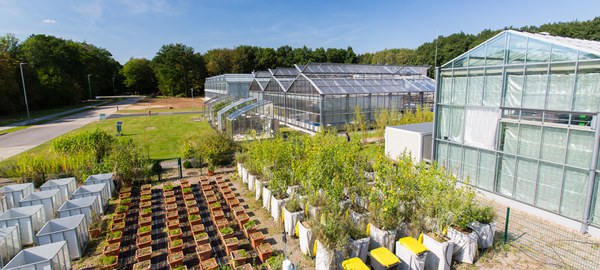
The team at the Institute of Bio- and Geosciences – Plant Sciences (IBG-2) at Forschungszentrum Jülich contributed to the study. During field campaigns, the researchers used Unmanned Aerial Vehicle (UAV) images – high-resolution aerial photographs – to measure and analyse the seasonal growth of cassava varieties from above. These recordings were combined with photosynthetic efficiency measurements, revealing how effectively the plants capture and convert light into energy. The team demonstrated that the plants were able to maintain high photosynthetic activity and continue growing even during periods of drought. Additionally, plants were measured under controlled conditions using positron emission tomography (PET) to determine the characteristics of carbon transport. For this purpose, labelled carbon was introduced into the plants to track how quickly and where it is transported within the tissues.
The team's research showed that modifying potassium transport increased plant growth, carbon dioxide assimilation and carbon flow velocity, thereby helping to better understand the complex interplay between carbon uptake, transport and storage in cassava. These findings could therefore help to make cassava cultivation more productive and climate-resistant – a significant contribution to global food security.
W. Zierer, M. Fritzler, T. J. Chiu, R. B. Anjanappa, S.-H. Chang, R. Metzner, J. Quiros, C. E. Lamm, M. Thieme, R. Koller, G. Huber, O. Muller, U. Rascher, U. Sonnewald, H. E. Neuhaus, W. Gruissem & L. Bellin. Engineering vascular potassium transport increases yield and drought resilience of cassava. Nat. Plants 11, 2498–2510 (2025). DOI: https://doi.org/10.1038/s41477-025-02159-7