

Go to Online-effzett for the latest topics and background information
Digital twins
Whether it’s a field or a climate chamber, virtual representations of agricultural systems are being created on computers at Jülich. These digital twins not only optimize yields, but also promote climate protection.

When Dr. Felix Bauer works on “his” farm, he doesn’t have to set foot in the barn or go out into the field. He simply sits down at his computer; Bauer is not a farmer, but a researcher. Together with colleagues at the Institute of Bio- and Geosciences (IBG-3), he has created a virtual replica of the Damianshof farm, located 30 kilometres away – a digital twin.
The real farm in the municipality of Rommerskirchen has been run by the same family for six generations; on around 115 hectares of land, they grow sugar beets, potatoes, and cereals, using sustainable farming practices. The digital twin of the farm is part of the ReGenFarm project coordinated by Jülich and Bayer AG.
A digital twin can be used to understand, test, and optimize processes and measures, but also to model specific scenarios in order to derive predictions. All calculations are based on extensive information from the real world. In the case of the farm, this includes data on the fields, crop rotations, fertilizer schedules, and irrigation, as well as climate and weather data and site characteristics, such as soil conditions.
With the help of the virtual farm, Felix Bauer can simulate, for example, how different methods of cultivating the fields or the consequences of climate change would affect soil quality or yields. “Our findings are intended to support farmers in making decisions in their day-to-day work, such as when to apply fertilizer,” explains the agricultural engineer.
Carbon farming approach
The central question in the ReGenFarm project is: “How can we bring more carbon into the soil?” explains project manager Prof. Sander Huisman from IBG-3. This idea is based on the concept of carbon farming. The aim is to remove CO₂ from the atmosphere and store it in agricultural soils in the long term. This can be achieved, for example, by growing cover crops, optimizing varieties and crop rotations, returning harvest residues to the soil, or increasing the use of organic fertilizers.
This approach not only combats climate change, but also improves the quality and health of the arable soil because the carbon forms fertile humus.
On top of that, carbon farming measures can be economically beneficial, as farmers can sell CO2 certificates for the additional carbon stored. “We can use our model to simulate and evaluate the various carbon farming options – for example, the amount of carbon stored in the soil and the resulting crop yields,” says Huisman.
Climate scenarios of the future
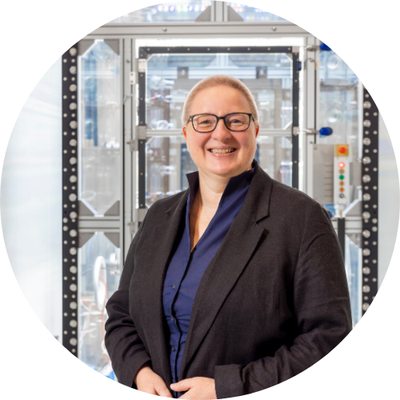
Even more complex than ReGenFarm is the digital twin of the AgraSim research platform. This platform is not only concerned with carbon, but with a whole range of interactions between soil, plants, and the atmosphere. The real-world data are provided by a huge facility in a hall on campus. It features six massive metal cylinders, which are connected to garage-sized climate chambers: “The cylinders are each filled with three tonnes of real arable soil. Together with the chambers, they form an ecosystem sealed off from the outside world,” explains Prof. Andrea Schnepf, who is part of the interdisciplinary AgraSim team. The facility offers researchers precise control over numerous parameters – for example, CO₂ concentration, humidity, and precipitation, as well as soil temperature and water content.
“We can thus cultivate plants under very different conditions, observe them, and study the effects of future climate scenarios on agricultural cropping systems,” says Schnepf. In future, the data from the experiments will flow directly into a digital twin. It will run on one of Jülich’s high-performance computers and calculate how the ecosystem develops. The researchers will compare the digital twin’s results with the values from the experiments – such as plant and root growth or gas exchange between soil, plants, and the atmosphere. This will allow its predictions to be verified and its quality further improved.
While Schnepf models small-scale processes in the root zone, Prof. Harrie-Jan Hendricks-Franssen focuses primarily on processes on a continental scale. “Due to climate change, we expect more extreme weather events in the future, such as heavy rainfall or droughts.”
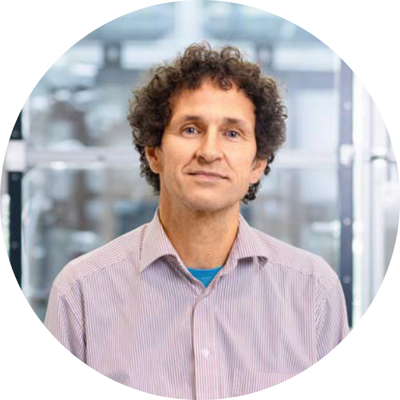
To take this into account, he uses “storyline” simulations: “You take the atmospheric flow conditions that have led to extreme events in the past – for example, the 2018 drought – and shift them into a future that is a few degrees warmer,” says Hendricks-Franssen. Such modelling provides him with all the necessary climate variables to set the chambers for the desired scenario.
“However, our models for the interactions between soil, plants, and the atmosphere require a great deal of computing time,” says the scientist. This is because these simulations have to calculate many physical and biophysical processes in detail. That is why he and his colleagues will also rely on AI models. “They predict the future based on the relationships learned during training, without constantly having to solve physical equations. Although they are slightly less accurate, they can perform many simulations in a short space of time,” explains Hendricks-Franssen.
The researchers hope this will enable them to make predictions about how agriculture can best adapt to future climatic conditions: Which varieties grow best? Which crop rotation is most productive? Which measures improve soil quality and are climate-friendly? In the end, the digital twin pays off twice over: for farmers and for the climate.
Diverse twins: Jülich researchers develop and use digital twins in a wide range of fields – from health to the energy transition. In the European research infrastructure EBRAINS, for example, individually personalized brain models are being created that can be used to test therapies for mental illnesses virtually. In energy research, the Jülich campus serves as a real-world laboratory: the digital twin of the Living Lab Energy Campus (LLEC) links buildings, grids, storage facilities, and heating systems to enable an intelligent, sustainable, and economical energy system. Medical researchers, in turn, are working on a digital replica of a human cell. Their aim is to better understand disease processes and tailor therapies accordingly. Jülich is also participating in the “Destination Earth” project, which is creating a digital model of the entire Earth and its climate – the largest digital twin ever created. Support is provided by the Jülich Supercomputing Centre, which configures and optimizes computer systems specifically for digital twins.
This text is taken from the 2/25 issue of effzett. Text: Janosch Deeg
Never miss an issue of effzett again

Last Modified: 14.09.2026